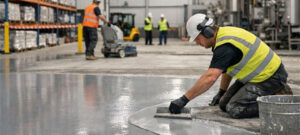


When businesses think about flooring, the focus often stays on upfront costs. However, in industrial environments, flooring is a long-term investment that directly impacts maintenance budgets, operational efficiency, and overall profitability. This is where Industrial Flooring Contractors play a critical role. Their expertise ensures that the right materials, installation techniques, and maintenance strategies are applied from the beginning, helping businesses significantly reduce costs over time.
Companies like Stomp Resins specialise in delivering high-performance flooring systems designed not just for durability, but for long-term financial efficiency. Understanding how professional contractors contribute to cost savings can help business owners make smarter decisions for their facilities.
Why Industrial Flooring Is a Long-Term Investment
The industrial flooring polishing is under constant stress due to heavy machinery, chemical spillages and foot traffic. Selecting the incorrect solution is likely to cause frequent repairs, downtimes, and higher costs of operation.
It is known that industrial resin flooring systems have a life span of 15 to 20 years or more depending on its usage and maintenance, which is much much more cost-effective in the long run when compared to traditional flooring systems.
Also, epoxy flooring systems are able to save up to 75 percent of the wastes throughout the life of the building since the number of replacements is reduced.
These figures demonstrate why the cost of a large amount of money on expert contractors is not an expense, but a long-term financial move.
1. Strategic Material Choice to save in the long-run.
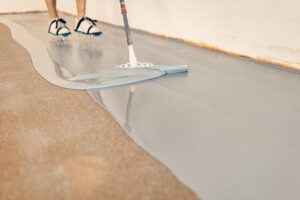
The initial selection of the appropriate flooring system is very important in lowering the cost of repairs in the future. The demands placed on industrial environments vary, with the exposure to chemicals to the movement of heavy machinery. Professional contractors always take into consideration factors like the type of industry, intensity of usage, degree of moisture, and load requirement before prescribing an appropriate solution. By matching the flooring material with such conditions, they avoid the early wearing of the material and guarantee extended durability. As an example, resin flooring is highly preferred because it is resistant to abrasion and chemicals, which greatly reduces the likelihood of damage to the surface over time.
2. Customised Flooring according to Industry needs.
Industrial spaces do not operate in one size fits all manner of operation, and this is the reason why the one size fits all approach cannot be applied to flooring. Contractors examine the operational requirements of a facility, be it manufacturing, warehousing or food processing. This custom-made solution also provides the flooring to work as best in the actual working conditions. Through solving unique problems at the initial phases, businesses can prevent undergoing unnecessary repairs and operational disturbances in future.
3. Adequate Surface Preparation Guarantees Long Life.
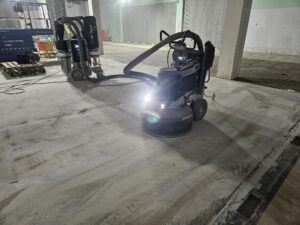
Any flooring system needs a solid base so that it would perform well in the long run. Experienced contractors focus on appropriate surface preparation, which involves grinding, levelling and repair of the damage on the substrate. This is done to remove the latent weaknesses that might result in cracks, peeling or premature failure. It can be said that proper preparation will save a lot of money in the long run, However, in the short run, it may appear as an added cost, but with proper preparation, one can save a lot of money in the long run.
4. Structural Failures: Preventing Structural Failures by Expert Techniques.
In addition to the basic preparation, the advanced techniques are employed by experienced contractors to enhance the substrate and also to assist in adhesion. This minimises chances of structural problems like delamination or uneven surfaces. By ensuring that the possible issues are solved prior to installation, they would have provided a strong foundation upon which the flooring system can be supported without the need of expensive repair in the future.
5. Flooring with Smooth Floors Minimises maintenance work.
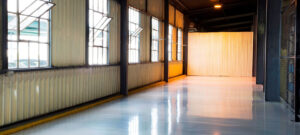
Their smooth finish is one of the greatest benefits of the new industrial flooring systems. In contrast to the classic flooring with its joints and gaps, smooth surfaces eliminate weak spots in which damage usually starts. This design does not allow dirt, moisture and chemicals to build up and thus, the floor becomes simple to clean and maintain. This makes businesses spend less on maintenance yet have a cleaner and safer environment.
6. Accelerated Installation Reduces downtime.
Time is a decisive element in industrial life and any time-out can result in loss of money. Professional contractors employ effective constructions and superior materials which dry faster and enable the facilities to be reopened sooner. It is possible to have some flooring systems that can be ready in just a few hours and this would greatly minimise the disruption. This not only saves time but also assists in keeping the level of productivity.
7. Long life span lowers the cost of replacement.
Floors of industries are regularly subjected to heavy loads, chemical spillage, and mechanical impact. The high performance flooring systems are engineered to be able to absorb these challenges without easily wearing out. The structural integrity of their structures in the long run diminishes the frequency of replacements. This longevity can be translated to cost saving in the long term and enhanced business returns of businesses.
8. Low Maintenance Surfaces Conserve the Costs of Operations.
In industrial places, especially where hygiene is essential, maintenance is a continuous cost. The modern flooring solutions provide non porous floors which resist stains, spills and contaminants. This helps in cleaning more quickly and easily without having to use specialised chemicals or a lot of labour. In the long run, low maintenance activities would result in big savings in terms of time and operational expenses.
9. Improved Safety Reduces Financial Risks.
The quality of flooring directly affects the safety in the workplace. Poor surfaces will cause slips, trips, and accidents, which could incur medical costs, legal costs, and delays in operations. The safety considerations that professional contractors undertake include anti slip paints and the right surface textures. Such measures minimise the probability of accidents, and prevent the business from incurring unnecessary financial costs.
10. Energy Conservation helps in the reduction of costs.
The industrial flooring systems that are currently in use have the potential of enhancing the efficiency of a facility energy-wise. Reflective surfaces can also improve the lighting environment, eliminating the need to use more artificial lighting. There are also materials that offer thermal resistance, which can be used to stabilise indoor temperatures. The aforementioned benefits result in lower energy usage and lower utility bills in the long run making flooring an important point as far as overall operation efficiency is concerned.
Why Choose Stomp Resins for Industrial Flooring
Choosing the right contractor is just as important as selecting the flooring material. Stomp Resins offers a comprehensive approach that focuses on durability, efficiency, and cost savings.
Their expertise includes:
- Tailored flooring solutions for different industries
- High-quality resin systems designed for longevity
- Precision installation techniques
- Ongoing support and maintenance services
By focusing on performance and long-term value, they help businesses maximise their return on investment.
Conclusion
Industrial flooring is more than just a surface. It is a critical component that affects daily operations, safety, and long-term costs. While the initial investment may seem significant, working with experienced contractors ensures that every aspect of the flooring system is optimised for durability and efficiency.
From expert material selection and seamless installation to reduced maintenance and improved safety, professional contractors play a vital role in lowering overall expenses. Their ability to deliver long-lasting solutions helps businesses avoid frequent repairs, minimise downtime, and maintain consistent productivity.
For companies looking to make a smart, future-focused investment, partnering with specialists like Stomp Resins ensures that industrial flooring contractors become a cost-saving asset rather than a recurring expense.