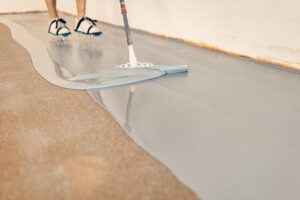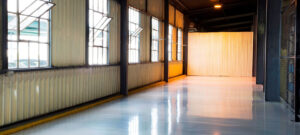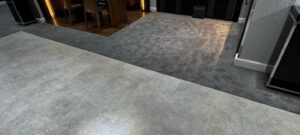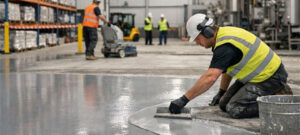


The visible resin finish may receive most of the attention, but the bond is created at the surface beneath it. Oil, dust, weak concrete, laitance, moisture and old coatings can cause blistering, delamination and early wear even when the topcoat is a high-quality product.
Professional floor preparation creates a clean, sound and appropriately textured substrate. The method should be chosen from site assessment rather than a fixed preference for grinding or blasting every floor.
Stomp Resins provides preparation and resin-floor installation for industrial and commercial sites across Birmingham and the UK.
Survey the Existing Substrate
Identify concrete strength, age, repairs, coatings, contamination, joints and signs of moisture. Drawings and operational history can reveal buried channels or previous processes. A small trial area may show how the floor responds to preparation and whether hidden weak layers are present.
Test Moisture Conditions
Moisture moving through a slab can disrupt the resin bond or create osmotic blistering. Suitable tests and product limits should guide the specification. A dry-looking surface is not proof of acceptable moisture, and turning on heaters shortly before installation does not necessarily change conditions within the slab.
Remove Contamination
Oil, grease, chemicals and cleaning residues can penetrate concrete. Surface washing alone may spread contamination or leave it in pores. The contractor should identify the substance, use appropriate treatment and verify the surface. Heavily affected concrete may need removal rather than repeated coating attempts.
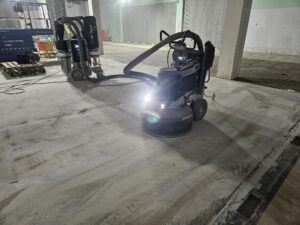
Use Mechanical Preparation
Diamond grinding, shot blasting, planing and other methods create different profiles and removal rates. The choice depends on the resin system, floor condition, edges and site constraints. Preparation should expose sound material without polishing the surface or damaging the slab beyond the repair plan.
Repair Cracks and Defects
Holes, spalls and cracks need compatible repair materials and correct geometry. Active movement must be distinguished from static damage. Filling every crack rigidly beneath the coating can fail if the slab continues to move, while weak patch edges can break under traffic.
Detail Joints and Edges
Construction and movement joints, drains, doorways, plinths and wall junctions are common failure locations. Agree whether joints will be carried through, resealed or treated with a specialist detail. Good edge termination prevents water and traffic from lifting thin, exposed coating edges.
Control Dust and Cleanliness
Fine dust can remain after grinding and form a weak layer between concrete and primer. Industrial vacuuming and careful inspection are essential. Once prepared, the floor should be protected from foot traffic, spills and other trades until the resin is applied.
Check Environmental Conditions
Resin products have limits for substrate temperature, air temperature, humidity and dew point. Condensation on a cool slab can be invisible but damaging. Monitoring should continue through application and cure, with ventilation and heating planned safely for the specific materials in use.
What to Prepare Before Requesting a Quotation
A useful quotation begins with accurate information. Photos and measurements can help an initial conversation, but they do not replace a survey where condition, access, compliance or hidden construction affects the recommendation. Prepare:
- the outcome you want and the problem you need to solve
- relevant photographs, drawings, manuals or previous reports
- known defects, changes and earlier repair or installation history
- access limits, operating hours and important programme dates
- questions about scope, exclusions, warranties and aftercare
Build a Resin Floor from the Substrate Up
Stomp Resins can assess, mechanically prepare and repair industrial floors before installing the specified resin system. Investing in preparation reduces avoidable adhesion failures and gives commercial sites a more durable floor rather than a short-lived cosmetic coating.