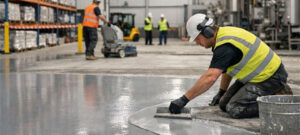


Heavy-duty flooring for warehouses must handle constant forklift traffic, pallet stacking, and heavy pallet loads while ensuring safety and longevity. Stomp Resins Ltd delivers robust resin-based systems that transform worn-out concrete into reliable surfaces for Manchester-area operations.
This guide covers selection, installation, maintenance, and upgrades to optimize warehouse performance.
Why Warehouses Need Heavy-Duty Flooring
Warehouses face extreme demands from daily operations, including impacts from dropped goods and chemical spills from inventory handling. Standard concrete cracks under these stresses, leading to downtime and repair costs exceeding thousands annually. Heavy-duty options like resin coatings provide a resilient base that supports 24/7 logistics without failure.
Common Warehouse Flooring Challenges
- Load Stress: Weights up to 10 tons per forklift wheel demand compressive strengths over 12,000 psi.
- Abrasion: Constant turning wears surfaces, creating slip hazards.
- Hygiene Issues: Dust and spills breed contaminants in high-volume storage.
Stomp Resins addresses these with tailored solutions, earning praise for minimal disruption during concrete preparation.
Types of Heavy-Duty Flooring Solutions
Several flooring types suit warehouses, but resin systems dominate for their versatility and durability.
Epoxy Resin Flooring
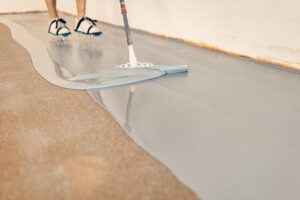
Epoxy Resin Flooring offers a seamless, chemical-resistant layer ideal for high-traffic zones. Thicknesses from 2-6mm handle dynamic loads effectively.
Polyurethane and MMA Options
Polyurethane provides flexibility for vibration-heavy areas, while methyl methacrylate (MMA) cures rapidly for overnight installs. Both integrate with Concrete Flooring bases for enhanced adhesion.
Industrial Factory Flooring Variants
For specialized needs, Industrial Factory Flooring styles incorporate quartz aggregates for extra grip and impact resistance.
Warehouse Flooring for Heavy Loads: Key Considerations
Warehouse flooring for heavy loads requires precise engineering to distribute weight evenly and prevent fatigue. Top systems achieve flexural strengths of 5,000-7,000 psi, supporting racking systems up to 20 feet high without deflection.
Load Capacity Testing
Standards like BS EN 13813 classify floors as SR (self-leveling resin) with ratings for point loads over 5kN. Warehouse flooring for heavy loads from Stomp Resins passes these rigorously, ensuring compliance for insured operations.
Real-world applications show these floors maintaining levelness under 500-ton daily throughput, reducing settlement risks by 80%.
Forklift Proof Flooring: Durability in Action
Forklift proof flooring withstands tire scrubs and point pressures from narrow wheels, preventing pitting or delamination. High-build epoxies with polyurethane topcoats excel, offering abrasion resistance rated >1,000 Taber cycles.
Anti-Slip and Traction Features
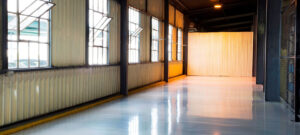
Incorporating silica sand or aluminum oxide achieves pendulum slip ratings of 36+ (wet), cutting accident rates significantly. Forklift proof flooring also features color zoning for traffic lanes, improving navigation in low-light conditions.
Stomp Resins’ expertise shines in projects minimizing operational halts, much like their office floor grinding testimonials.
High Impact Floor Coatings for Protection
High impact floor coatings absorb shocks from falling pallets or machinery drops, with Izod impact values exceeding 10 ft-lbs/in. These coatings flex under stress, then rebound without cracking, extending service life to 15+ years.
Layering for Maximum Protection
A typical build includes primer, body coat, and broadcast aggregates sealed by a UV-stable topcoat. High impact floor coatings reduce repair frequency by 60%, as seen in logistics hubs.
Customization allows for ESD (electrostatic dissipative) variants, vital for electronics warehousing.
Industrial Warehouse Upgrading Tips
Industrial warehouse upgrading tips start with assessment: survey cracks, measure flatness to F-number standards (aim for F30+), and test moisture levels below 75% RH.
Step-by-Step Upgrade Process
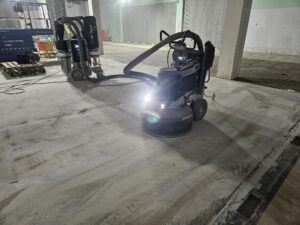
- Surface Prep: Diamond grind to CSP 3-5 profile, removing contaminants—Stomp Resins excels here with dust extraction.
- Priming: Apply moisture-tolerant primers for vapor suppression.
- Installation: Pour in sections, curing in 12-24 hours.
- Testing: Verify hardness via Shore D (80+) and adhesion (>200 psi).
Budget £25-£60/m², recouping via 30% less downtime. Phased installs keep aisles operational.
Cost-Effective Strategies
Prioritize high-wear zones first, using screed overlays for minor undulations. Integrate LED lighting reflection from glossy finishes to save 15% on energy.
Installation Best Practices with Stomp Resins
Stomp Resins Ltd follows a “one-stop shop” model, from consultation to warranty-backed finishes. Teams control dust with HEPA vacuums and schedule around peak shifts, completing 5,000m² warehouses in weeks.
Post-install, floors reach full strength in 7 days, ready for full forklift loads. Their residential screeding success translates to precise warehouse prep.
Maintenance for Long-Term Performance
Routine upkeep involves daily sweeping, weekly neutral detergent mopping, and quarterly inspections for wear. Avoid steam cleaning; use mild acids for stains. Annual resealing extends life by 5 years.
High impact floor coatings simplify this, resisting most spills without special tools.
Safety and Compliance Standards
Heavy-duty floors meet HSE guidelines with R12 slip resistance and fire ratings (Class 1). Color coding per BS 8300 aids emergency egress. Upgrades enhance worker morale, cutting turnover by 20%.
ROI and Long-Term Benefits
Investments yield 400% ROI over 10 years through reduced repairs (£10k+ savings) and productivity boosts. Enhanced aesthetics attract premium tenants.
Conclusion
Heavy-duty flooring equips warehouses for peak efficiency, with Stomp Resins Ltd providing expert warehouse flooring for heavy loads, forklift proof flooring, high impact floor coatings, and industrial warehouse upgrading tips. Upgrade today for safer, more reliable operations.